Why Independent Boutiques Are Turning to Wholesale Ethnic Wear Partners
Running a boutique or a growing fashion label means constantly solving the same puzzle: how do you keep your shelves full of pieces that feel distinctive, without burning through your margins or your time chasing inconsistent suppliers?
BLOG
6/24/20263 min read
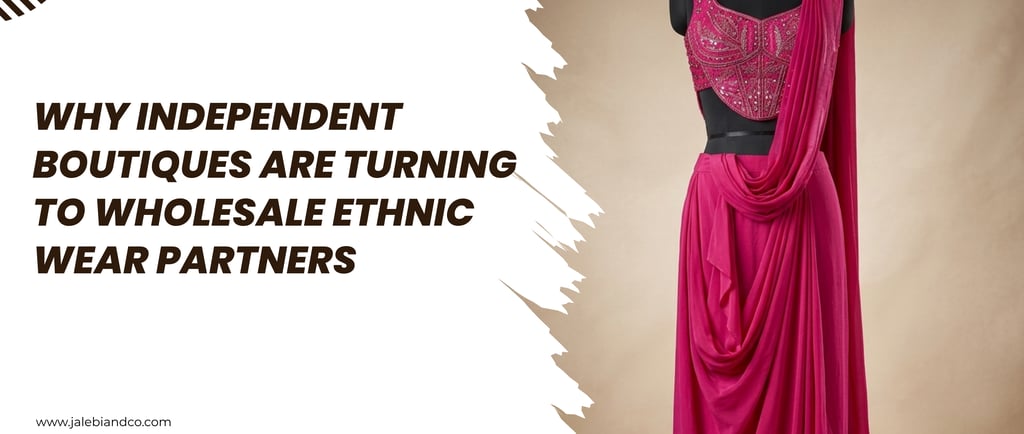
It's a problem that's pushed a lot of independent retailers, online sellers, and even larger fashion houses toward a model that used to be an afterthought — partnering directly with a wholesale ethnic apparel manufacturer instead of trying to build everything in-house.
The Real Cost of Doing It Alone
Sourcing ethnic wear independently sounds straightforward until you're actually doing it. Finding artisans who can deliver consistent quality at scale, managing fabric sourcing, dealing with production timelines, and absorbing the financial risk of unsold inventory — all of that adds up fast, especially for a business that's still establishing itself. Many retailers learn this the hard way: a single inconsistent batch from an unreliable supplier can undo months of customer trust.
This is exactly the gap a dependable wholesale partner is meant to close. Instead of managing five or six moving parts, a retailer works with one team that already has the production pipeline, the artisan relationships, and the quality checks built in.
What Actually Makes a Wholesale Partner Worth Choosing
Not all wholesale suppliers operate the same way, and the difference shows up quickly once orders start coming in. A few things worth looking for:
Consistency at scale. Hand-finished embroidery and traditional techniques are part of what makes ethnic wear special, but that same craftsmanship has to be reproducible across a bulk order without quality dropping off by piece fifty. This is harder than it sounds, and it's usually the first thing that separates an established manufacturer from a smaller, less reliable one.
Design that doesn't feel generic. A lot of wholesale catalogs lean heavily on safe, repetitive designs because they're easy to mass-produce. Retailers building a brand identity need more than that — they need a partner whose pieces feel current and considered, not like stock filler that shows up in every other store.
Flexibility for different business models. Whether a retailer is running a boutique with a curated few hundred pieces a season or a larger operation needing thousands of units, the right partner should be able to scale with the order rather than forcing every buyer into the same minimum structure.
Transparent communication on timelines and fabric. Few things damage a retail relationship faster than vague answers about delivery dates or fabric sourcing. Retailers planning around a festive season or a launch date need a partner who treats deadlines as commitments, not estimates.
The Heritage-Meets-Trend Advantage
There's also a quieter advantage to working with a manufacturer that's genuinely rooted in traditional craft rather than one simply printing patterns onto fabric to mimic the look. Customers, increasingly, can tell the difference. Hand-block printing, real embroidery work, and considered tailoring carry a texture and durability that machine-only production doesn't replicate. For a retailer, that translates directly into fewer returns, better customer reviews, and pieces that justify their price point instead of competing purely on cost.
At the same time, designs that stay rooted only in tradition without any modern sensibility can struggle to move in markets where customers — especially younger ones — want ethnic wear that fits into their everyday lives, not just festival-specific pieces. The sweet spot for most retailers right now is exactly in that overlap: garments built with authentic technique, styled and cut for contemporary, everyday wearability.
Building a Long-Term Sourcing Relationship
The retailers who get the most value out of wholesale partnerships tend to treat it as a relationship, not a transaction. That means giving feedback on what's selling, communicating seasonal needs early, and working with a manufacturer who's willing to collaborate on designs rather than just fulfilling a generic order sheet. A good partner will often flag fabric trends, regional demand shifts, or styling directions before a retailer even asks, simply because they're closer to production and to the craft itself.
For a business trying to grow, that kind of partnership does more than fill inventory gaps. It becomes part of the foundation the brand is built on — reliable enough to plan around, distinctive enough to stand out, and rooted in craftsmanship that customers can actually feel the difference in.
If sourcing has been the bottleneck holding a collection back, the fix usually isn't doing more of it alone. It's finding the right partner to do it with.