The Art of Mixing Tradition and Trend: How to Style Ethnic Wear for Everyday Life
There's a moment almost every woman with a wardrobe full of ethnic wear has had: staring at a beautifully embroidered kurta or a richly woven dupatta, loving it, and then putting it right back because “where would I even wear this?” That question is exactly what's changing right now. .
BLOG
6/25/20263 min read
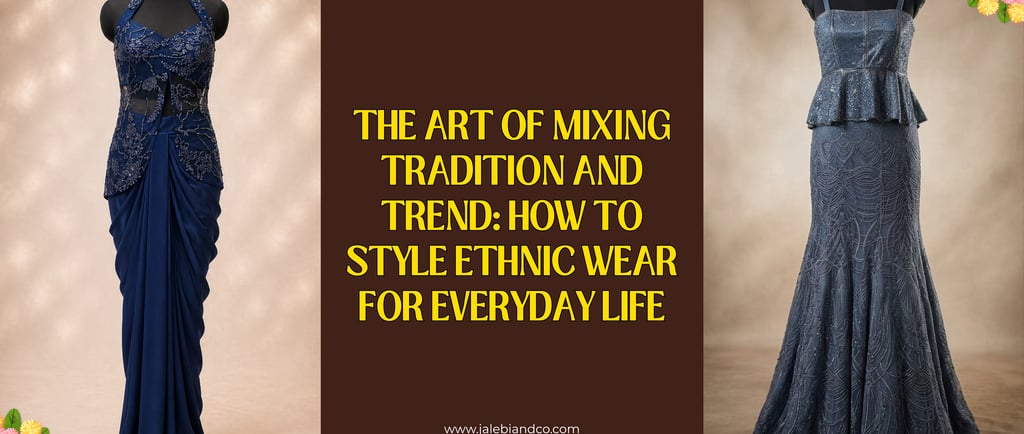
Ethnic wear is no longer reserved for weddings and festivals tucked away at the back of the closet. It's moving into boardrooms, brunches, and Tuesday afternoons — and the shift says a lot about how we think about heritage today.
Heritage Doesn't Have to Be Heavy
For a long time, ethnic clothing carried an unspoken rule: more occasion, more embellishment. A simple outing didn't call for a kurta set with mirror work or a hand-block-printed saree. But that thinking is outdated. The most interesting wardrobes today blend the old and the new without apology — a relaxed cotton kurta with sneakers, an asymmetric ethnic top tucked into denim, a dupatta repurposed as a scarf with a blazer.
This is where craftsmanship actually matters more, not less. A garment that's been made the old way — hand-finished seams, natural dyes, real embroidery instead of printed patterns — holds up to this kind of mixing because it has texture and depth. It doesn't need ten accessories to look intentional. It already looks like it has a story.
Building an Everyday Ethnic Wardrobe
If you're trying to bring ethnic pieces into regular rotation, start with versatility rather than statement. A few principles that work:
Choose fabrics that move with you. Cotton, linen, and lightweight handloom weaves are far easier to wear through a workday than heavily structured silk. They breathe, they crease in a way that looks lived-in rather than wrinkled, and they pair naturally with modern silhouettes.
Let one piece do the talking. If your kurta has detailed embroidery at the neckline, keep everything else minimal — plain bottoms, simple footwear, understated jewelry. Mixing two “loud” elements is where outfits start to feel costume-y rather than considered.
Reach for layering pieces. A short ethnic jacket or an embroidered waistcoat thrown over a plain kurta or even a basic shirt instantly elevates a simple outfit without requiring a full traditional look. This is one of the easiest ways to wear heritage craftsmanship in a thoroughly modern way.
Don't be afraid of contrast footwear. Loafers, white sneakers, or block heels with an ethnic outfit isn't a compromise — it's how a lot of contemporary stylists are reframing the silhouette altogether. It signals that the outfit was chosen, not just pulled out for an occasion.
Why the Craft Behind the Garment Matters
There's a difference between clothing that's mass-produced to chase a trend and clothing that's made with actual technique — hand embroidery, traditional block printing, careful tailoring passed down through artisans who've spent years perfecting it. You can usually feel it before you can explain it: the fall of the fabric, the way a print sits rather than just lies flat, the finishing on the inside of a seam.
This is part of why “old way of making, new way of wearing” has become such a meaningful idea in ethnic fashion right now. It isn't about choosing between authenticity and modernity. It's about understanding that real craftsmanship is already flexible enough to belong in a contemporary wardrobe — it was never meant to be confined to one occasion a year.
Confidence Is the Actual Trend
If there's one thread running through every era of fashion, it's that the clothes people remember aren't the safest ones — they're the ones worn with conviction. An ethnic piece styled with a bit of irreverence, a willingness to break the “rules” of when and how it's supposed to be worn, often ends up looking more striking than a head-to-toe traditional outfit chosen out of obligation.
So the next time that kurta or dupatta comes out of the closet, skip the question of “where would I wear this” and ask instead, “how would I wear this today.” Pair it with what you already own. Let the craftsmanship speak instead of over-styling around it. Heritage was never meant to sit still — it was meant to be worn, repeated, and made personal, one outfit at a time.
That's the whole idea behind clothing that respects where it comes from while keeping up with where you're actually going.