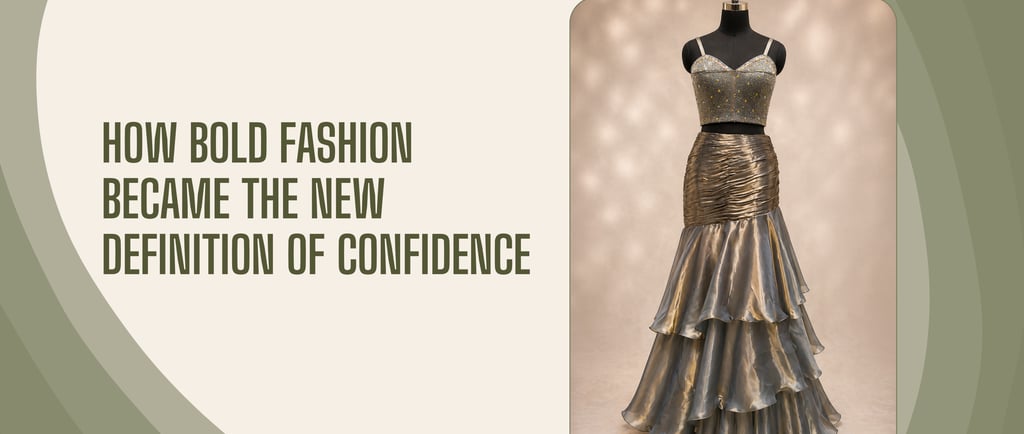
How Bold Fashion Became the New Definition of Confidence
Fashion has always been connected to confidence. The way people dress often shapes how they feel about themselves and how they are perceived by others. For decades, however, confidence in fashion was often associated with looking polished, elegant, or socially acceptable. The goal was to appear refined without attracting too much attention.
BLOG
7/17/20264 min read
That idea has changed significantly.
Today, bold fashion is increasingly becoming the modern expression of confidence. Women are moving away from dressing purely to fit expectations and are embracing clothing that feels more expressive, individual, and intentional.
This shift reflects more than a change in style preferences. It represents a broader cultural movement toward authenticity, self-expression, and personal identity.
Confidence Is No Longer Defined by Playing Safe
For a long time, fashion rules encouraged restraint.
Neutral colors, classic silhouettes, and understated styling were often considered the safest way to appear sophisticated. Dressing confidently usually meant avoiding anything too experimental or attention-grabbing.
While those styles still have their place, the definition of confidence has evolved.
Modern confidence is no longer about blending in perfectly. It is about being comfortable enough to express individuality openly. Bold fashion reflects that shift because it allows people to make choices based on personal identity rather than social approval.
Whether through strong silhouettes, statement colors, layered textures, or unconventional styling, bold fashion communicates certainty.
And certainty naturally reads as confidence.
Social Media Changed Fashion Visibility
The rise of social media has played a major role in this transformation.
Fashion today exists in a highly visual environment where personal style is constantly visible and instantly shared. Platforms filled with repetitive trends and identical aesthetics have created a strong desire for originality.
As people became more exposed to similar-looking content, individuality started becoming more valuable. Audiences no longer respond as strongly to outfits that feel overly safe or predictable.
Bold fashion stands out because it creates visual distinction.
It interrupts repetition.
In a digital landscape where many styles start to blur together, expressive dressing naturally attracts attention and creates stronger identity.
Personal Style Has Become More Important Than Trends
Another reason bold fashion is gaining momentum is the growing shift away from trend dependency.
Modern consumers are increasingly interested in building wardrobes that feel personal rather than temporary. Instead of dressing according to what is currently popular, many women are focusing on what reflects their personality and confidence.
Bold fashion supports that mindset because it prioritizes self-expression over conformity.
The appeal is not necessarily about being loud or dramatic. It is about dressing with intention and wearing pieces that feel emotionally connected to the individual.
This approach creates a stronger sense of authenticity, which is why bold fashion often appears more confident than perfectly trend-driven styling.
Bold Fashion Creates Presence
Certain outfits naturally hold attention longer than others.
This is rarely because they are expensive or overly complicated. More often, it is because they carry a strong visual identity. Structured silhouettes, unexpected color combinations, handcrafted details, or sharp contrasts create a sense of presence that safer styling often lacks.
Bold fashion works because it creates memorability.
People notice outfits that feel intentional. Even subtle boldness—such as a distinctive cut or an unconventional pairing—can completely change how someone is perceived.
That visual impact becomes associated with confidence because it signals comfort with visibility.
In other words, bold fashion suggests that the person wearing it is not afraid to be seen.
Fashion Is Becoming More Emotionally Driven
Modern fashion is also becoming increasingly tied to emotion and identity.
People are no longer choosing clothing only for practicality or social acceptance. They are choosing pieces that reflect mood, personality, creativity, and values.
Bold fashion fits naturally into this shift because expressive clothing often carries emotional energy. A statement silhouette, vibrant color palette, or experimental design creates a stronger emotional response than safe, predictable styling.
This emotional connection makes outfits feel more personal and memorable.
As a result, bold fashion becomes less about appearance alone and more about self-expression.
Confidence Comes From Authenticity
One reason bold fashion feels powerful is because authenticity has become deeply connected to modern confidence.
Today, confidence is less about perfection and more about self-assurance. People are increasingly drawn toward individuals who appear comfortable in their own identity rather than those trying to meet every expectation perfectly.
Bold dressing reflects that self-assurance.
It signals that someone is making style decisions based on personal preference rather than external approval. That independence naturally creates a stronger presence.
Interestingly, bold fashion does not always mean dramatic clothing. Sometimes confidence comes through a single statement detail, a strong silhouette, or simply styling something in an unexpected way.
The defining factor is intention.
The Shift Toward Individuality
Fashion is moving away from uniformity.
Consumers are becoming more selective, more expressive, and more interested in originality than mass approval. This has created space for fashion that feels artistic, distinctive, and deeply personal.
Bold fashion represents that evolution.
Instead of dressing to disappear into trends, people are dressing to communicate something about themselves. They are embracing silhouettes, textures, and styling choices that feel unique to their identity.
This movement is especially visible among younger audiences, who increasingly value creativity and individuality over rigid fashion rules.
Conclusion
Bold fashion has become the new definition of confidence because confidence itself has changed.
It is no longer about dressing perfectly within expectations. It is about expressing individuality with clarity and intention. Modern consumers want clothing that feels personal, emotionally connected, and visually distinctive.
Bold fashion offers exactly that.
It creates presence, encourages self-expression, and allows people to build a style identity that feels authentic rather than trend-driven.
As fashion continues to evolve, one thing is becoming increasingly clear: confidence today is not about playing safe.
It is about dressing in a way that feels unapologetically your own.